Why Everyone is Buying the Trekz Air Bone Conduction (Full Review)
I've been using the Trekz Air bone conduction headphones for about six months now, and after dozens of runs, commutes, and work calls, I finally feel ready to give a full, no-nonsense account of what they are like in real life. Bone conduction was something I was curious about for years — the promise of open-ear listening that keeps you aware of your surroundings felt ideal for city running and cycling. What I found was a genuinely useful product with clear strengths and a few trade-offs you should know before buying.
Introduction: Why I bought the Trekz Air
I bought the Trekz Air because I wanted to stay safer and more aware while running outside without losing access to music and podcasts. I often run on mixed sidewalks and bike paths where hearing traffic, cyclists, or other pedestrians matters. I also wanted something comfortable to wear for long stretches — during the day I sometimes keep headphones on while working at my standing desk, and regular in-ear buds start to feel intrusive after a couple of hours.
After about six months of real-world use — in rain, sweat, public transit, and several long conference calls — I have a clear sense of what the Trekz Air does well and where it falls short. Below I break down the design, sound, comfort, battery, connectivity, and practicalities with the sort of specifics I wish I’d known before I bought them.
Design and build: lightweight and confident
First impressions matter, and Trekz Air nails that. The frame is extremely lightweight and sits around the back of your head like a slim, flexible band. I was surprised by how unobtrusive it felt the first time I put them on — compared to the clamping feeling of over-ear headphones or the sealed-in sensation of true wireless buds, the open-ear design is freeing.
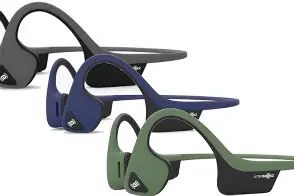
The build uses a combination of metal and plastic with a soft rubberized finish on the parts that touch skin. After months of sweaty runs, the finish shows some wear in areas where my hair rubs, but there are no cracks or structural problems. The hinge points and the flexible band seem robust enough for everyday use; I did accidentally toss them into my gym bag without a case a couple of times and they survived without issue.
What I liked about the physical design
- Extremely lightweight — I sometimes forget I'm wearing them.
- Simple, minimalist controls — volume and power are easy to find by feel.
- Open-ear profile keeps ears free, so I can wear glasses or sunglasses comfortably.
- Included carrying case is compact and useful for keeping cables and the small charging adapter.
What I didn't like
- The finish collects oils and dirt from hair and skin; I clean them regularly.
- Metallic parts can feel a bit cold in winter if left outside for a short period.
Fit and comfort: made for long sessions
Comfort is where these headphones shine. Because they rest on the cheekbones rather than inside or over the ear, they're comfortable during runs and bike rides and don't cause ear soreness after long meetings. I wore them for a three-hour co-working day once and only removed them because I needed absolute silence, not because of discomfort.
The fit is snug enough that they rarely shift during running, but they're also flexible enough to accommodate different head shapes. If you have a very small head, you may need to adjust them a few times to settle in. I noticed that wearing them under a beanie can change the positioning slightly, which affects bass response a bit, but it's nothing dramatic.
Sound quality: clear, but not bass-heavy
Because bone conduction transmits vibrations to your inner ear instead of pumping air into the ear canal, the sonic signature is inherently different from traditional headphones. Here's how it translated to everyday listening for me.
Clarity and vocals: Vocals, podcasts, and spoken-word content are excellent. I found voice detail to be very good for phone calls and long-form podcasts — speech cuts through cleanly and is easy to understand even in a noisy gym.
Music and bass: This is the trade-off: bass is noticeably lighter than what you get from over-ear or in-ear headphones. If you want chest-thumping low end for EDM or hip-hop, Trekz Air won't deliver the sub-bass punch. For acoustic, indie, orchestral, or singer-songwriter playlists, the experience is pleasant and immersive in a different way — you get more of the midrange and highs. After a few weeks I adjusted my playlist choices accordingly and found myself appreciating the clarity in mids and vocals.
Soundstage and separation: The open-ear nature creates a somewhat different perception of space. It feels airy and not claustrophobic; instruments are distinct but not exaggerated. On balance, I found the sound uniquely suited to outdoor use where environmental awareness is more important than theatrical soundstage or bass impact.
Find top-rated Audio & Headphones products at great prices.
Shop Amazon →Environmental awareness and safety
One of the biggest reasons I stuck with the Trekz Air is safety. Being able to hear traffic, approaching cyclists, and people talking nearby is a genuine advantage for urban running. I noticed that I was more alert to road noises and could respond faster when crossing streets. That said, because some sound from the environment still mixes with your audio, you may be tempted to crank the volume higher in very noisy settings — at that point the bone conduction advantage diminishes.
On busy streets with heavy traffic, I found I had to keep volume moderate to maintain awareness. This is by design and should be viewed as a feature, not a flaw, especially if you care about situational awareness.
Microphone and call quality
I took dozens of calls with the Trekz Air — from quick catch-ups to hour-long work calls. Call clarity is solid, but not perfect. My voice comes through clearly enough for colleagues to understand me without repeating, though during windy outdoor calls the microphone picks up wind noise and becomes less effective. In an office or indoors, the microphone performs well; people said my voice sounded natural and not overly distant.
If you live in a very windy area or make a lot of calls outdoors, consider that calls will be noticeably cleaner with a traditional headset that uses an inline or in-canal mic with better wind rejection.
Battery life and charging
Battery life is decent — not industry-leading, but more than enough for my daily needs. Trekz Air typically lasts me around 6 to 7 hours of mixed use on a single charge. I usually charge them once every other day with moderate use; on long travel days I pack the compact charger and top them up during an extended lunch break.
Charging is straightforward: a small magnetic cable snaps into place. The magnets aren't strong enough to reorient the device wildly, so it stays put while charging. I didn't notice significant battery degradation over the six months — a full charge still gives me the same runtime as when they were new.
Connectivity and Bluetooth stability
Bluetooth pairing was simple and reliable. I pair my phone and laptop separately and switch between them without trouble. Connection stability has been very good: I walked through crowded subway stations and the Trekz Air maintained a steady stream with only rare brief dropouts — typically when I moved behind very thick concrete pillars or into dead zones in older buildings.
Pairing with multiple devices is supported, and auto-reconnect works as you'd expect. I did notice a couple of stutters when switching sources mid-song, but nothing that interrupted calls or made them unusable.
Durability and water resistance
These headphones are sweat-resistant and built for active use. I ran in light rain several times and had no issues. I don't recommend submerging them — their resistance is meant for sweat and light splashes, not for swimming. After months of sweaty workouts, they show signs of cosmetic wear but no functional problems. If you consistently push into heavy downpours or wet-weather cycling, consider a more water-resistant model; for most runners and gym-goers, Trekz Air holds up fine.
Controls and usability
Physical buttons are on the right side: power/multi-function and volume up/down. They're tactile and easy to use without looking, which is great mid-run. The multi-function button handles play/pause, answer/hang-up, and voice assistant activation. I appreciated not having to pull out my phone to skip tracks or answer a call.
Find top-rated Audio & Headphones products at great prices.
Browse Now →One small annoyance: the buttons are close together, so fumble-prone fingers can occasionally press the wrong one. It was a minor nuisance that I quickly adapted to.
Pros & Cons
- Pros:
- Open-ear design keeps you aware of surroundings — great for running and cycling
- Very comfortable for long sessions; minimal ear fatigue
- Lightweight and durable for daily active use
- Clear vocals and excellent spoken-word performance
- Reliable Bluetooth pairing and decent battery life
- Cons:
- Weak bass compared to in-ear and over-ear headphones
- Microphone is vulnerable to wind noise outdoors
- Sound leaks to people very close by at high volumes
- Not ideal if you want full noise isolation or immersive listening
Comparison: Trekz Air vs. Typical In-Ear True Wireless vs. AfterShokz Aeropex
| Feature | Trekz Air (Bone Conduction) | Typical In-Ear True Wireless | AfterShokz Aeropex |
|---|---|---|---|
| Design | Open-ear bone conduction band that rests on cheekbones | In-ear buds that seal the ear canal | Updated bone conduction with lighter, improved bass |
| Sound Isolation | None — ears remain open for ambient sound | High — isolates external noise | None — open-ear like Trekz Air |
| Bass | Light — not suitable for bass-heavy genres | Strong — good low-end impact | Improved over Trekz Air but still lighter than in-ear |
| Comfort for Long Wear | Excellent — minimal ear fatigue | Varies — can cause ear fatigue after long use | Excellent — refined fit and lightweight |
| Best Use Case | Outdoor running, cycling, commuting, podcast listening | Travel, office calls, immersive music listening | Outdoor activities where improved audio and comfort matter |
| Water/Sweat Resistance | Sweat/light rain resistant | Varies by model — many have IP ratings | Higher sweat resistance; some models improved IP rating |
Buying guide: Is the Trekz Air right for you?
Here are the practical questions I asked myself and the answers that helped me decide. If you read and agree with most of these points, Trekz Air is likely a good fit.
1. Do you value situational awareness when you listen?
If you run or cycle on roads or in busy city areas and want to hear traffic, cyclists, and people around you, Trekz Air excels. I felt safer on routes I used to avoid because I could hear approaching vehicles better than with sealed in-ears.
2. Are you okay with reduced bass?
If deep bass is essential to your enjoyment — for example, if you listen primarily to bass-heavy electronic music — this might not be the right choice. I adjusted playlists to match the strengths of the Trekz Air and enjoyed acoustic, indie, and spoken-word content more than dance tracks.
3. Do you make a lot of outdoor calls?
The built-in mic is fine for most indoor calls, but if you're frequently taking important calls outdoors in windy conditions, you may find the mic wanting. I learned to step into a sheltered area or pause calls during particularly windy stretches.
4. How long do you need battery life to last?
Trekz Air's 6–7 hour runtime covered my typical day comfortably. If you routinely need all-day playback without charging, consider higher-end models or bring a charging solution for long travel days.
5. Do you use glasses or sunglasses often?
I wear glasses daily, and the Trekz Air never interfered with the fit or comfort. That was a pleasant surprise, and I appreciated not having pressure from ear cups or ear tips.
Tips for getting the best experience
- Position the transducers (the small pads that sit near your temples) directly in front of the ears on your cheekbones for best clarity.
- Start with moderate volume in noisy environments; the open-ear design makes you want to crank it, but that reduces safety benefits.
- Use EQ on your music app to boost mids and slightly lift bass if you prefer a warmer sound — small adjustments help.
- Carry the small case or at least a soft pouch to protect them in transit; it prevents cosmetic wear and keeps the charging cable handy.
- For calls outdoors, cup your hand around the mic area or find a sheltered spot to reduce wind noise.
Conclusion
After six months with the Trekz Air, I still reach for them regularly. They're not the best headphones for every task — they won't replace high-end in-ear or over-ear sets for bass-heavy listening or for blocking noise on a plane — but they have a clear purpose that they fulfill very well. For outdoor runners, cyclists, commuters, and anyone who prioritizes situational awareness and long-term comfort, Trekz Air is genuinely compelling.
In my experience, the trade-offs are straightforward: you give up deep bass and some call robustness in exchange for safety, comfort, and an open, airy listening experience. If that trade-off matches your priorities, the Trekz Air will likely become a daily companion the same way they did for me.