The Ultimate Setup Guide for Your V Series 2019
Introduction to a Value-Driven Classic
The landscape of home entertainment underwent a significant shift in 2019. As 4K resolution transitioned from a luxury feature to a standard expectation, manufacturers sought ways to deliver ultra-high-definition content to the masses without the premium price tag. Among the most notable entries of that era was the V Series 2019. Designed to bridge the gap between entry-level functionality and high-end visual performance, this series became a staple in living rooms, dorm rooms, and secondary viewing areas across the globe. Today, while newer models have entered the market, the V Series 2019 remains a highly relevant piece of hardware for those who prioritize value and essential smart features.
Setting up a television involves more than just plugging it into a power outlet. To truly unlock the potential of the V Series 2019, users must navigate a variety of picture settings, connectivity options, and software updates. This guide is designed to provide a comprehensive roadmap for owners, covering everything from initial assembly to advanced calibration. By understanding the underlying technology—such as the full-array LED backlighting and the SmartCast platform—users can ensure they are getting the best possible performance for their gaming, streaming, and cinematic needs. Whether you are unboxing this unit for the first time or reviving a pre-owned model, following these steps will ensure a professional-grade viewing experience.
Detailed Product Analysis: What Makes the V Series 2019 Tick?
The V Series 2019 was characterized by its commitment to "essential 4K." At its core, the series utilized a 4K Ultra HD resolution (3840 x 2160 pixels), providing four times the detail of traditional 1080p sets. However, resolution is only one part of the equation. The real strength of this model lay in its support for multiple High Dynamic Range (HDR) formats, including HDR10, HLG, and Dolby Vision. While many budget sets at the time ignored Dolby Vision due to licensing costs, its inclusion here ensured that users could view content from Netflix, Disney+, and 4K Blu-rays with the expanded color and contrast intended by creators.
Performance-wise, the V Series 2019 relied on a full-array LED backlight. Unlike edge-lit televisions that often suffer from uneven light distribution (the "flashlighting" effect), full-array lighting places LEDs directly behind the entire screen. This typically results in superior light uniformity and better contrast, although it is important to note that the 2019 V-Series generally lacked local dimming zones, a feature reserved for the M-Series and P-Series. Despite this, the Spatial Scaling Engine worked effectively to upscale older 720p and 1080p content, making local news broadcasts and older DVD collections look surprisingly crisp on a modern panel.
From a usability standpoint, the integration of SmartCast was a turning point. Instead of relying on a traditional app store that could become outdated, the V Series 2019 focused on a cast-first mentality. With Apple AirPlay 2 and Chromecast built-in, the TV became an extension of the user's smartphone or laptop. This approach bypassed the limitations of internal processors by letting the external device handle the heavy lifting of navigation while the TV focused purely on rendering the stream. Furthermore, compatibility with voice assistants like Alexa, Google Assistant, and Siri (via HomeKit) allowed the TV to integrate seamlessly into a wider smart home ecosystem.
Pros and Cons of the V Series 2019
Every piece of technology involves trade-offs, particularly in the value segment. Understanding where the V Series 2019 excels and where it falls short will help users set realistic expectations for its performance.
The Advantages
- Broad HDR Support: The inclusion of Dolby Vision, HDR10, and HLG is rare for a budget-friendly 2019 model, ensuring compatibility with almost all modern streaming content.
- Full-Array LED Backlighting: This provides much better screen uniformity than edge-lit alternatives, reducing distracting bright spots during dark scenes.
- Smart Home Integration: Built-in support for Apple AirPlay 2 and Google Chromecast offers immense flexibility for users who prefer controlling their TV via mobile devices.
- Low Input Lag: For gamers, the V Series offered a dedicated Game Mode that significantly reduced latency, making it a viable choice for console gaming on the PS4 or Xbox One generation.
- Versatile Sizing: The series was released in a vast range of sizes, from compact 40-inch models for kitchens or bedrooms to massive 75-inch panels for home theaters.
The Limitations
- Lack of Local Dimming: Without active local dimming zones, the "blacks" can sometimes appear more like deep charcoal in a completely dark room.
- Modest Peak Brightness: While it supports HDR, it does not reach the searing brightness levels of high-end QLED or OLED sets, meaning HDR highlights won't "pop" as aggressively in brightly lit rooms.
- Standard Refresh Rate: Capped at 60Hz, it does not support the 120Hz playback found in newer gaming-centric displays, which may affect the smoothness of high-speed sports or ultra-competitive gaming.
- Onboard Audio: Like most modern thin-bezel TVs, the built-in speakers are functional but lack the bass and soundstage required for a true cinematic experience.
Technical Comparison: V Series 2019 vs. Entry-Level Competitors
To understand where the V Series 2019 stood in the market, it is helpful to compare its technical specifications against the typical standards of its contemporary competitors in the entry-level 4K space.
| Feature | V Series 2019 Standard | Typical Entry-Level Competitor |
|---|---|---|
| Backlight Type | Full-Array LED | Edge-Lit LED |
| HDR Formats | Dolby Vision, HDR10, HLG | HDR10 Only |
| Smart Platform | SmartCast (AirPlay/Chromecast) | Proprietary App Store |
| Input Lag (Game Mode) | < 15ms | 25ms - 40ms |
| Voice Control | Alexa, Google, Siri Support | Limited or No Support |
Comprehensive Setup Guide
Step 1: Physical Placement and Installation
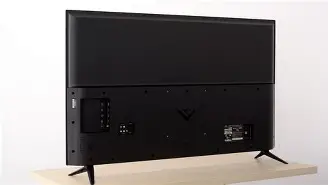
Setting the stage for a great viewing experience begins with the physical environment. The V Series 2019 features a wide viewing angle for a VA panel, but it is still best viewed from a centralized position. If you are using the included stand, ensure your furniture is wide enough, as the "feet" are positioned near the edges of the frame rather than in the center. For those wall-mounting, the V Series uses a standard VESA pattern. Ensure you use a mount rated for the weight of your specific screen size, and always locate a wall stud rather than relying solely on drywall anchors.
Find top-rated TVs & Home Theater products at great prices.
View Offers →Lighting in the room is equally important. Since this model has a semi-gloss screen, it handles moderate reflections well, but direct sunlight from a window can wash out the image. Position the TV away from direct light sources. Furthermore, if you are planning to add a soundbar later, check the clearance between the bottom of the bezel and the surface of your stand, as some larger soundbars might slightly obstruct the IR receiver for the remote.
Step 2: Initial Software Configuration
Once powered on, the TV will walk you through the SmartCast setup. The most critical step here is connecting to a stable internet connection. While a Wi-Fi connection is convenient, using an Ethernet cable for the LAN port is highly recommended if you plan on streaming 4K HDR content, which requires high bandwidth. After connecting, allow the TV to perform any firmware updates. Vizio frequently pushed updates to the 2019 models to improve the speed of the SmartCast interface and add compatibility for new streaming services.
Step 3: Optimizing the Picture Settings
Out of the box, many TVs are set to "Vivid" or "Store Demo" mode. These settings are designed to grab attention in a bright retail environment but are far from accurate for home viewing. For the most realistic colors and contrast on the V Series 2019, follow these adjustments:
Picture Mode: Switch to "Calibrated" or "Calibrated Dark." These modes provide the most accurate white balance and color temperature (closer to the D65 industry standard). Avoid "Vivid" as it over-saturates colors and crushes detail in bright areas.
Backlight: This should be adjusted based on your room's ambient light. In a dark room, a setting of 30-50 is often sufficient. In a bright room, you can go higher. Keep "Brightness" (which actually controls black levels) at its default 50 to avoid washing out the image.
Color Temperature: Set this to "Normal" or "Warm." While "Cool" might make whites look "whiter" initially, it actually adds a blue tint that obscures subtle color nuances in skin tones and nature scenes.
Advanced Options: Ensure "Black Detail" is set to Off or Low to prevent losing detail in shadows. Turn off "Edge Enhancement" and "Noise Reduction" when watching high-quality 4K content, as these features can add unnatural artifacts to an already sharp image.
Shop the latest TVs & Home Theater picks on Amazon.
See Deals →Step 4: Audio Calibration and External Sound
The V Series 2019 includes a variety of audio presets like "Standard," "Music," and "Movie." For general use, the "Movie" preset typically provides a wider soundstage. If you find dialogue hard to hear, look for the "Dialog Enhancer" setting. However, if you are using an external soundbar or receiver via the HDMI ARC (Audio Return Channel) port, make sure to go into the Audio menu and set the Digital Audio Out to "Digital" or "Bitstream." This ensures that the TV passes the raw audio signal to your external device for proper decoding of Dolby Digital or DTS formats.
Buying Guide: Is the V Series 2019 Still a Good Choice?
When considering a V Series 2019 in the current market—perhaps as a refurbished unit or a hand-me-down—it is important to evaluate it based on your specific use case. This television is not a "flagship" killer, but it serves specific roles exceptionally well.
Best For: The Secondary Room
If you need a television for a guest room or a home office, the V Series 2019 is an excellent candidate. Its smart features are robust enough that you won't need an external streaming stick, and its 4K resolution ensures that as you move closer to the screen (as is common in smaller rooms), the pixels remain invisible. It handles Netflix, Hulu, and YouTube with ease, providing a "just works" experience for casual viewers.
Best For: Budget Gaming
While it lacks the 120Hz refresh rate and HDMI 2.1 features of the newest consoles (PS5 and Xbox Series X), the V Series 2019 is still a fantastic companion for 60Hz gaming. The low input lag in Game Mode is competitive with much more expensive sets. If you are a player who focuses on single-player adventures or RPGs rather than professional-tier competitive shooters, the visual fidelity provided by the HDR support will make your games look stunning without the steep investment of a gaming monitor.
Best For: The Smart Home Enthusiast
Because the V Series was ahead of its time regarding integration, it remains a strong choice for those who use HomeKit or Google Home. Being able to ask your phone to "Play Stranger Things on the Living Room TV" is a convenience that many modern budget TVs still struggle to implement as cleanly as the Vizio SmartCast system does through its integrated protocols.
Conclusion
The V Series 2019 represents a landmark in the democratization of 4K HDR technology. By focusing on the features that matter most to the average viewer—broad format support, consistent backlighting, and flexible smart integration—it carved out a significant niche in the market. While technology has certainly marched forward, the core experience provided by this series remains high-quality and user-friendly. By taking the time to physically place the unit correctly, connecting it to a robust network, and fine-tuning the picture settings away from the harsh factory defaults, you can enjoy a visual experience that competitors often fail to reach at this price level. The V Series 2019 isn't just a budget television; it is a well-engineered tool for enjoying the vast world of modern digital content, proving that you don't always need to spend a fortune to enjoy a premium view.