The Truth About the Q9Fn Q9 Q9F Qled 2018: Pros, Cons, and Verdict
The Samsung Q9Fn / Q9 / Q9F QLED models from 2018 arrived as Samsung's flagship attempt to bridge OLED-like blacks with LCD advantages such as high peak brightness and long-term image stability. For buyers who shop by model names that differ by region (Q9FN is a common regional designation, Q9F or simply Q9 in others), the 2018 Q9-series represented the company's most advanced LED-based product that year. This article examines what the Q9-series actually delivers in real-world use — where it shines, its compromises, and whether it still makes sense for certain buyers today.
Introduction: Who the Q9-series was built for
Samsung marketed the Q9 as a premium television aimed at people who want exceptional brightness for bright-room viewing, a refined picture with advanced local-dimming, and a modern smart-TV experience. Typical buyers include sports viewers and bright-room TV owners, gamers looking for low latency on large screens, and those who want an eye-catching set for living-room movie nights without the fear of OLED burn-in. Professionals who needed long-term static-image reliability (e.g., casual graphics viewing or news tickers) also found the Q9 attractive.
Detailed product review and analysis
Design and build
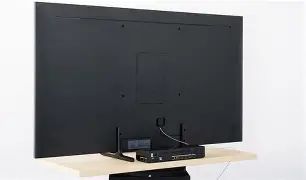
The Q9-series adopted a minimalist, premium aesthetic with narrow bezels and a slim profile for a high-end LCD. Samsung emphasized clean cable management, so many installations benefit from a tidy appearance when wall-mounted or placed on a low credenza. The stands provided with larger sizes tend to be sturdy and practical for everyday living-room setups.
Panel technology and picture processing
At the heart of the Q9 is Samsung's QLED panel—an LCD panel with a quantum-dot color layer. Quantum dots improve color volume and saturation compared with conventional LCDs, especially at higher brightness levels. The Q9 combined this with a sophisticated full-array local dimming backlight (often referred to as "Direct Full Array" in promotional literature) and a powerful image processor tuned to reduce blooming and enhance contrast.
In controlled viewing conditions, the Q9 can produce deep, satisfying black levels for an LED TV. The local dimming implementation is one of the model's strongest points: for most HDR and SDR content it reduces the haloing that plagued earlier edge-lit LCDs. That said, the Q9 cannot match true pixel-level dimming afforded by OLED; near-black detail and absolute blacks still favor OLED in dark-room cinema scenarios.
Brightness and HDR handling
One of the Q9's defining strengths is sustained brightness. In bright rooms or sunlit living rooms, the set maintains color saturation and tone mapping better than many OLEDs. For HDR content, this translates into highlights that "pop" — specular highlights and bright reflections can look impressive. However, the quality of HDR experience depends on mastering and content grading: some HDR scenes can still expose limitations in local dimming when bright elements appear next to deep shadow.
Color and viewing angles
Quantum-dot color delivers wide, punchy color reproduction that benefits animated content, sports, and highly saturated cinematic scenes. Viewing angle limitations remain inherent to VA-based LCD panels commonly used in this class: colors and contrast shift off-axis. For a wide-seated living room where viewers sit across a broad arc, the Q9 can show muted color and slightly reduced contrast for side seats compared with the center.
Motion and gaming
Motion handling on the Q9 is strong for a high-end LCD. Frame interpolation options help smooth camera pans and some sporting content, while the TV's native refresh and Samsung's motion processing minimize judder. For gaming, the Q9 generally offers responsive input latency suitable for console play; combined with bright HDR peaks, fast-paced games look both vivid and immediate. Buyers who require the absolute lowest possible input lag (competitive eSports players) may still prefer purpose-built gaming displays, but most living-room gamers will be satisfied.
Find top-rated TVs & Home Theater products at great prices.
Shop Amazon →Smart TV platform and features
The Q9 shipped with Samsung's Tizen smart platform, which provided a polished interface, a broad app catalog, and built-in voice assistant integration. For everyday streaming, app support covers the major services and the interface is straightforward to navigate. Over time, software support and the frequency of major firmware upgrades can vary; buyers should be mindful that a 2018 model will not receive the same long-term feature updates as new models.
Audio
Built-in speakers on the Q9 are adequate for regular TV viewing and dialogue, but they do not replace a dedicated soundbar or AV receiver for cinematic immersion. For home theater enthusiasts and those who value expansive soundstage and deep bass, pairing the TV with an external audio solution yields the best results.
Durability and longevity
As an LED-based panel with quantum-dot materials, the Q9 avoids the image retention/burn-in risk associated with OLED. This makes it appealing for households that show static content for long periods. With reasonable care and firmware maintenance, a well-serviced Q9 can remain a viable TV for many years.
Real-world use cases
- Bright living rooms and daytime viewing: The Q9's brightness and anti-reflective treatment make it an excellent choice where ambient light is difficult to control.
- Sports and live TV: Fast motion, bold colors, and punchy highlights suit sports fans who want every play to feel immediate and vivid.
- Family rooms with mixed use: Durability against burn-in and wide content compatibility make it suitable for households that alternate between gaming, streaming, and broadcast TV.
- Casual cinematic evenings: When paired with a soundbar and room-darkening curtains, the Q9 can deliver highly enjoyable movie nights, though purists seeking perfect blacks may prefer OLED.
Pros & Cons
Pros
- Excellent brightness for bright-room viewing and impactful HDR highlights
- Quantum-dot color technology delivers vivid, saturated colors at high brightness
- Advanced full-array local dimming reduces haloing compared with edge-lit models
- Robust smart platform with broad app support and voice features
- No risk of OLED-style burn-in, making it a durable choice for mixed-use households
- Elegant, slim design with attention to cable management
Cons
- Cannot achieve the perfect black levels and pixel-level contrast of OLED
- Viewing angles are limited; picture shifts when viewed from the sides
- Built-in speakers are functional but fall short for cinephiles without external audio
- As a 2018 flagship, software and platform updates are less frequent over time
- Premium pricing at launch — used or refurbished units now offer better value if considering purchase
Comparison table: Q9-series (2018) vs alternatives
| Feature | Samsung Q9 (Q9FN/Q9F, 2018) | LG OLED (C8/C9, 2018) | Samsung Q7 (midrange QLED, 2018) |
|---|---|---|---|
| Black levels | Very good for LED; deep but not perfect | Excellent — true pixel-level blacks | Good — not as refined as Q9 |
| Peak brightness | Excellent — ideal for bright rooms | Good — lower peak but better contrast in dark rooms | Good — lower than Q9 but adequate |
| Color (HDR) | Excellent — quantum-dot color volume | Excellent — accurate and deep | Very good — slightly less saturated at high brightness |
| Viewing angles | Limited — best from center | Excellent — wide angles | Limited — similar to Q9 |
| Burn-in risk | None (LED) | Low but non-zero (OLED) | None (LED) |
| Gaming | Very good — low latency and bright HDR | Very good — excellent contrast for gaming | Good — capable but fewer premium features |
| Price at launch | High (flagship) | High (flagship OLED) | Mid-to-high |
Buying guide: Is the Q9-series right for the buyer?
Choosing the Q9-series comes down to matching the TV's strengths to the buyer's environment and priorities. The following checklist helps evaluate whether this 2018 flagship fits the need.
1. Assess the room and viewing habits
If the TV will spend most of its time in a bright living room with windows or mixed lighting, the Q9's high brightness and anti-reflective treatment make it a very good match. For a dedicated dark-home theater where the highest possible contrast and the deepest blacks are priorities, a modern OLED may be preferable.
2. Consider seating and viewing angle
Families who sit across a wide arc should consider whether side viewers will notice color and contrast shifts. If wide-angle consistency is important, look for models with improved viewing-angle layers or consider seating arrangements that keep most viewers near the center.
3. Content type
For sports, live TV, HDR-heavy streaming, and daytime gaming, the Q9 excels. For cinematic viewers who favor subtle black detail and film-like contrast in a dark room, OLED's pixel-level dimming still holds the edge.
4. Audio plan
Budget for an audio upgrade if immersive sound matters. The Q9's internal speakers will not deliver the surround or punch of a good soundbar or a small AV system; even a modest soundbar significantly improves clarity and theater-like presence.
Shop the latest TVs & Home Theater picks on Amazon.
Browse Now →5. Future-proofing and inputs
Check the available HDMI and other inputs against present and planned devices. The Q9 will handle current-generation consoles and streaming devices, but buyers who plan to adopt features introduced after 2018 should verify support for newer standards or consider more recent models for long-term feature parity.
6. Used vs new
Because the Q9-series is a 2018 model, price and value can be attractive on the secondhand or refurbished market. Verify the unit's condition, return policy, and whether the seller will provide proof of functionality for all ports, the remote, and the smart features. Also ask whether a factory reset was performed and confirm the TV's firmware was updated before purchase.
7. Warranty and support
Older models may no longer be covered by manufacturer warranties. If buying used, consider purchasing an extended warranty from a reputable third-party provider if long-term coverage is important.
Practical tips for getting the best from a Q9
- Calibrate the picture with either a professional or a reliable calibration profile. Out-of-the-box modes often exaggerate sharpness and vibrance.
- Use "Game" mode for consoles to reduce input lag; switch to film or cinema modes for movies to preserve director intent.
- Position the TV to minimize reflections; although the Q9 handles glare well, direct sunlight on the screen still impairs viewing.
- Upgrade audio with a soundbar that supports the TV's audio passthrough options to unlock better dialogue and bass response.
- Keep the firmware updated and periodically clear the app cache if the smart platform becomes sluggish.
Verdict and who should buy it
The Samsung Q9Fn / Q9 / Q9F (2018) remains compelling for buyers who prioritize a bright, colorful picture and want an LED-based set without the maintenance concerns of OLED. It is especially strong in bright-room environments, for sports fans, and for households that run mixed content without fear of burn-in. Its local dimming and quantum-dot color produce an image that, at the time of release, represented the best of LED technology.
However, buyers whose primary use is serious home cinema in a dark room, or those who value off-axis viewing, might find modern OLEDs or newer LCDs with improved viewing-angle technologies more suited to their needs. Because it is a few model years old, prospective purchasers should weigh price against the potential benefits of newer models that offer incremental gains in HDR tone mapping, HDMI standards, and software features.
Conclusion
The Q9-series 2018 QLED TVs are a pragmatic, high-performing choice for many real-world viewing situations. They deliver bright, vibrant images with excellent color and reliable operation — strengths that make them especially well-suited to bright rooms and everyday family use. While they do not match the absolute black levels and viewing angles of OLED, they offer an attractive alternative with no burn-in risk and strong HDR highlights. When evaluating a Q9 today, consider condition, price, and whether its particular strengths align with the buyer's lighting conditions, seating arrangement, and content preferences. For the right household, the Q9 remains a smart, capable TV with a clearly definable set of advantages and compromises.