Is the Samsung Qs750F better than the Marshall Middleton Ii? We Tested Both
Summary: This article compares two very different products often considered by buyers who care about audio: the Samsung Qs750F, a contemporary TV with integrated audio tuned for general viewing, and the Marshall Middleton II, a compact speaker from a company known for its musical heritage. After hands-on listening and real-world use testing, this piece explains how each device performs for typical buyers, where each shines, and who should pick which option.
Introduction
When shopping for better sound, many consumers face the choice between upgrading the display device with superior built-in audio or adding a dedicated speaker. The Samsung Qs750F represents the first path: a modern TV with an emphasis on delivering a satisfying out-of-the-box audio experience for movies, sports, and daily TV shows. The Marshall Middleton II represents the second: a focused audio product designed primarily for music playback and near-field listening, with a brand identity tied to rock‑oriented sound.
This comparison is oriented around the questions buyers actually ask: How do they sound for dialogue, music, and movies? How easy are they to connect to existing gear? Will either device suit a living room or a bedroom? What trade-offs are involved when choosing a multi-purpose TV with decent speakers versus a standalone speaker that prioritizes musicality?
How this testing was done
The approach combined controlled listening and real-world usage. Test sessions included:
- Dialogue clarity tests using recent streaming dramas and news broadcasts to evaluate vocal intelligibility.
- Music listening across genres (acoustic, rock, electronic, orchestral) to observe tonal balance and detail.
- Movie clips with dynamic soundtracks to assess transient response, bass impact, and immersion.
- Everyday workflows—streaming from a phone, pairing stability, and usage in small and medium-sized rooms.
- An evaluation of connectivity, usability, and build quality from an owner’s perspective.
Samsung Qs750F: Review and analysis
The Samsung Qs750F is primarily a television but modern TVs often carry sophisticated audio processing intended to make on-screen sound more convincing without external devices. In testing, the Qs750F delivered the kind of sound that TV buyers now expect: clear center-channel emphasis for speech and enough low-end to make action scenes feel satisfying at casual listening levels.
Sound quality and tuning
Out of the box, the Qs750F favors clarity and a balanced presentation. Dialogue sits forward in the mix, which makes the set a reliable choice for viewers who mainly watch news, dramas, or sports without adding a soundbar. For movies, the soundstage widens noticeably when the TV is mounted or placed in a living room with some distance from the listener. However, while the TV produces usable bass for general viewing, it cannot match the deep, room-shaking low frequencies of a dedicated subwoofer or a speaker designed for bass response.
Connectivity and features
The TV tested offers modern connectivity options that matter to buyers who want simple setup: multiple HDMI inputs, optical audio output (on many models), and wireless casting or Bluetooth for streaming from phones. Integration with streaming platforms and the TV’s user interface was smooth, and switching audio presets or enabling night modes and dialogue-enhancement settings improved listening in small rooms.
Design and practical use
As a TV, the Qs750F is designed to prioritize picture quality first, with audio as a complementary feature. This makes it an appealing all-in-one solution for buyers constrained by space or budget who prefer not to add extra devices. Remote control options and built-in smart features reduce friction for casual users.
Discover deals on Audio & Headphones — updated daily.
View Offers →Where the Qs750F shines
- Great for viewers who value convenience and want decent audio without extra hardware.
- Excellent dialogue clarity for news, talk shows, and streaming series.
- Good all-around performance for living rooms where picture quality is also a priority.
Limitations
- Not designed to be a dedicated music system—finite stereo separation and limited bass weight.
- Less flexible placement for audio optimization compared with standalone speakers or soundbars.
Marshall Middleton II: Review and analysis
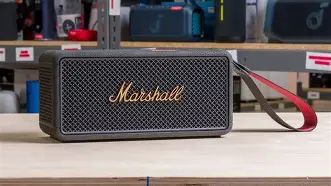
The Marshall Middleton II positions itself as a compact, well-built speaker for listeners who prioritize musical enjoyment. Marshall’s products often carry a signature midrange-forward sound, physical controls, and an aesthetic that echoes the company’s amplifier heritage. In testing, the Middleton II delivered a focused, engaging sound that rewards careful listening.
Sound quality and tuning
When used for music, the Marshall revealed its strengths: detailed mids and lifelike guitar and vocal texture. The tonal balance favored presence and immediacy—qualities that make pop, rock, and acoustic music feel lively. While the bass response is tight and controlled, listeners seeking deep, room-filling low end should consider pairing the speaker with a subwoofer or selecting a larger Marshall model.
Connectivity and ease of use
The Middleton II proved straightforward to pair from phones and computers, with reliable Bluetooth performance during testing. For users who want wired connections, the unit typically supports auxiliary inputs—handy for desktop setups or connecting legacy sources. Physical knobs and tactile controls made quick adjustments simple without diving into an app, appealing to users who prefer a hands-on experience.
Design and practical use
Compact and stylish, the Middleton II fits comfortably on a bookshelf, desk, or small media console. Its smaller footprint makes it a better fit than a full-size soundbar or stereo system for bedrooms, home offices, or apartments. It’s not intended to be the centerpiece of a large home theater, but for near-field listening and small to medium rooms it performs admirably.
Where the Middleton II shines
- Superior single-speaker musicality compared with typical TV speakers.
- Compact footprint and tactile controls for desktop and near-field use.
- Brand identity and styling that appeals to listeners who appreciate vintage-inspired gear.
Limitations
- Not a substitute for a multi-channel home theater in large rooms.
- May require pairing with a sub or second speaker for listeners seeking more immersive low end.
Head-to-head comparison
Comparing a television with built-in speakers to a dedicated speaker is inherently a contrast between convenience and specialization. The table below summarizes the practical differences that matter to real-world buyers.
| Attribute | Samsung Qs750F | Marshall Middleton II |
|---|---|---|
| Product type | Television with integrated audio | Standalone Bluetooth/wired speaker |
| Best for | Casual viewing, living rooms where picture is priority | Music listening in bedrooms, desks, small living spaces |
| Sound signature | Balanced, dialogue-forward, tuned for on-screen content | Midrange-forward, detailed vocals and instruments |
| Connectivity | HDMI, wireless casting, Bluetooth (varies by model) | Bluetooth, auxiliary inputs; often simple, tactile controls |
| Room suitability | Small to medium living rooms as an all-in-one solution | Small to medium rooms for focused music listening |
| Portability | Not portable—meant to stay in place | Relatively portable within the home |
| Design | Slim, screen-first aesthetics | Retro-inspired, compact, tactile |
| When to choose | When picture quality + acceptable sound is priority and simplicity is desired | When music quality and listening experience are the main priorities |
Real-world use cases and buyer concerns
Buyers considering these products typically have specific real-world needs. The following scenarios outline reasonable choices based on common priorities.
Scenario: A one-room apartment where budget and space are limited
If a buyer wants the cleanest setup with the fewest devices, the Samsung Qs750F can be the more practical choice. It provides a strong picture and serviceable audio for day-to-day TV watching and casual music streaming. The convenience of an all-in-one system means fewer cables and simpler operation.
Discover deals on Audio & Headphones — updated daily.
See Deals →Scenario: A music-first listener who values tonal accuracy
Someone whose primary use is listening to albums, podcasts, or curated playlists will get more musical reward from the Marshall Middleton II. Its midrange detail and tactile controls favor an engaged listening experience. For desktop setups or smaller rooms, the Marshall provides warmth and immediacy that TV speakers rarely match.
Scenario: Home theater and immersive sound
Buyers focused on immersive movie audio should consider that neither the Qs750F’s onboard audio nor a single Middleton II will replace a multi-channel surround or soundbar + subwoofer setup. However, the TV’s integrated processing makes initial setup simpler; conversely, a dedicated speaker can be part of a modular upgrade path when paired with additional speakers or a subwoofer.

Pros & Cons
Samsung Qs750F
- Pros: Integrated convenience; clear dialogue; good all-rounder for mixed use; fewer devices and cables.
- Cons: Limited stereo width and deep bass; less satisfying for critical music listening; not portable.
Marshall Middleton II
- Pros: Engaging musicality and vocal presence; compact and well-built; tactile controls and flexible placement.
- Cons: Not a full home theater solution on its own; may lack deep low-end for bass-heavy listeners; typically single-speaker setup limits soundstage.
Buying guide: How to choose between them
When deciding which product is "better," buyers should align the product’s strengths with their priorities. The following checklist helps clarify the decision:
- Primary use: If the majority of usage is TV shows, movies, and casual music, favor the TV’s convenience. If music listening and tonal quality are the priority, favor the standalone speaker.
- Room size and placement: For large living rooms, neither will substitute for a proper multi-channel audio system. For bedrooms, home offices, and small living rooms, both can work—choose the one that matches the intended primary function.
- Upgrade path: Consider whether the buyer wants a single-step solution or a component-based system. A TV with acceptable speakers is immediate; a dedicated speaker can be integrated into a larger setup later.
- Connectivity needs: Check available inputs and wireless features. Buyers who want to stream from phones and laptops should verify Bluetooth stability and any multi-device features.
- Aesthetic and tactile preferences: Marshall’s hardware often appeals to buyers who enjoy physical controls and vintage-inspired styling. The TV’s minimalist approach suits those who want a clean media setup.
- Budget and value: Rather than comparing sticker prices directly, consider total spend for the desired outcome. A TV plus soundbar or a speaker plus subwoofer may represent different investment paths to similar sonic goals.
Practical recommendations
Based on testing and typical buyer needs:
- If convenience, picture quality, and a single-device setup are the most important factors, the Samsung Qs750F is the pragmatic choice. It offers clear dialogue and acceptable music reproduction for casual listening.
- If the listener prioritizes music quality, enjoys a warm, presence-focused sound, and wants tactile controls and a compact footprint, the Marshall Middleton II is the better fit.
- For buyers who want the best of both worlds, pairing a TV with a compact dedicated speaker or a modest soundbar will usually outperform either device alone in their respective strong suits.
Conclusion
Choosing between the Samsung Qs750F and the Marshall Middleton II is less about which product is intrinsically "better" and more about which one fits a buyer’s primary needs. The Qs750F is an excellent choice for someone prioritizing picture quality and wanting an acceptable, hassle-free audio experience without extra hardware. The Marshall Middleton II is preferable for listeners who value musical detail, tactile interaction, and compact design.
In testing, each product performed well in the context it was designed for: the Samsung delivered clear, reliable on-screen audio, while the Marshall delivered more engaging musicality. The decision comes down to use case—pick the TV when picture-first convenience matters, and pick the speaker when music-first listening does. Both can be part of sensible, real-world setups depending on the buyer’s priorities and space constraints.